Digital Texts
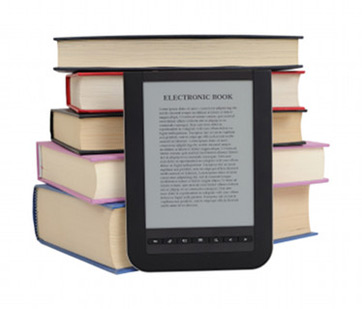
Digital textbooks are now available through a variety of websites and applications. Students can download digital textbooks directly to their e-readers, iPads, nooks, tablets, or kindles. According to module nine (n.d), Apple has partnered with publishers to put their content onto iOs devices with a a new iTextbooks app. In the future, more and more schools may utilize electronic books instead of traditional ones. The Department of Education is trying to help K-12 schools transition from the use of hard-cover texts to digital texts (Module nine, n.d).
There are multiple uses and benefits toward having digital textbooks in the classroom. CAST (2015) notes that traditional textbooks are formed on the premise that one size fits all. However, we now know this not to be true, and is a significant disadvantage to traditional books (CAST, 2015). Digital texts offer a variety of features that can help students. For example, the content can be separated from the display (CAST, 2015). In other words, students can focus on text or images, depending on what they are studying. The display can be manipulated by the user to help focus their attention. Another great advantage to digital texts is that they can be read aloud by the device (CAST, 2015). Digital books can be used by people with vision loss, as well as for students who tend to get distracted. Digital textbooks can also decrease the load that students have to carry on their backs.
E-Learning
Many students in today's education system participate in e-learning opportunities. Students who use the internet to gain access to information can work at their own pace, set their own class schedules, and challenge themselves with AP or elective courses. E-learning is a great option for students who do not typically succeed in the traditional education setting.
Burfield (2011) argues that one way teachers can effectively teach through e-learning is by utilizing cloud tools. Cloud computing uses the Internet and remote servers as a place of storage for data and applications. Users can access information from many devices because the information is stored in the cloud. This is very helpful for e-learning in many ways. For example, in this graduate course we use BlackBoard as our learning platform. All of my work is stored on BlackBoard (as well as Chalk and Wire) so that if I need to access something I have previously turned in, I can download it again from BlackBoard. Students in junior high and high school can use the cloud in a similar way. For example, students can use Google Apps for Education to communicate, collaborate, and store assignments and information (Burfield, 2011). Students at my school also use Google Apps as the storage for their e-Portfolios.
Open Course Software
Open course software are contributing to successful transformations of the education system by expanding the opportunity for users to gain access to materials and resources (Bonk, 2009). Over the years, the amount of free courses and software that is available has grown significantly. Users can now access this information to enhance their own lives. Bonk (2009) also notes that open course software creates a place for users to collaborate, communicate, and create in creative ways. The greatest part is that most open course software is free! Education will continue to expand with the existence of open course software.
References
Bonk, C. (2009). The world is open. San
Francisco, Calif.: Jossey-Bass.
Burfield, C. (2011, Apr 24). Going
the distance: Extending face-to-face learning through cloud tools. YouTube.
Retrieved from https://www.youtube.com/watch?v=2AVI8uwlNMA
Module nine: The world of anytime/anyplace learning (n.d.). Retrieved from
bb.snhu.edu

No comments:
Post a Comment